A good idea is only one part of an online project. Before a teen publishes, sells or accepts payment, the family needs a shared plan for the account, privacy, money, messages and what happens when something feels wrong.
This guide does not promise income or recommend a platform. Platform rules, minimum ages and parent-account requirements change, so verify the current official terms for every service you consider. Treat the first project as a supervised learning experience with clear limits, not as a guaranteed business opportunity.
Make six decisions before creating an account
These decisions form the safety frame. The ten-question plan below helps you fill in the details together.
Define the project
Write down exactly what the teen will create, sell or do—and what the project will not include.
Verify the platform rules
Read the current official minimum-age, parent-role, payment and content requirements.
Assign adult responsibilities
Decide who owns or supervises the account, receives payments and handles disputes or tax records.
Set privacy boundaries
Choose what identifying information, images, voice, location and routines will stay off the internet.
Secure the accounts
Use unique passwords, multifactor authentication where available and a clear recovery plan.
Schedule a monthly review
Review messages, earnings, spending, privacy, workload and whether the project still feels healthy.
“We do not pay, share a code, move to a private chat or send personal information until we verify the request through an official channel.”
Put the safety plan in writing before the account opens
Keep the answers specific enough that both the teen and adult know what to do without improvising under pressure.
What exactly are you creating or selling?
Name the product, service or content and any materials it uses. Set boundaries around topics, commissions or requests the teen will not accept.
What are the platform’s current age rules?
Read the official terms together. Confirm whether a parent-owned or supervised account is required and how identity or age verification works.
Who owns the account and receives the money?
Record the adult and teen responsibilities for logins, payments, refunds, disputes, bank access and keeping financial records.
What information always stays private?
Protect home and school details, live location, daily routine, personal phone numbers, documents and any security or verification codes.
What are the rules for face, voice and location?
Agree in advance whether the teen will appear on camera, use their real name, show identifiable locations or post in real time.
How much can the project cost before it earns anything?
Set a small spending cap and list approved tools. Never assume that buying a course, equipment or inventory will produce income.
Where can customers or collaborators contact you?
Keep contact within approved business channels. Set response hours and define which messages must be handed to an adult immediately.
How will you verify an offer or job?
Check the company through its official site, search independently and watch for payment requests, overpayments, gift cards, checks or pressure to act secretly.
When must a post disclose a relationship?
If a teen receives money, products or another benefit connected to a recommendation, review current advertising and endorsement rules before posting.
What happens at the monthly review?
Review revenue, expenses, messages, refunds, workload, privacy and account security. Decide together whether to continue, adjust, pause or stop.
Clear scripts when it is hard to find the words
“We will verify this using the company’s official website before we reply or click anything.”
“I only communicate through the approved account. I cannot move to a private chat or personal number.”
“That request is outside this project. I will not share personal information, location or private images.”
“What felt energizing, what felt unsafe or too demanding, and what boundary should change next month?”
Treat privacy, money and pressure as safety issues
Online work can mix public content, private messages and payments. Clear adult oversight should grow from the teen’s age, the platform rules and the project’s actual risks.
Be cautious about unsolicited offers, upfront payments, fake checks, gift cards, requests to buy equipment from a named vendor, or anyone who wants money or sensitive information before work begins.
Use strong unique passwords and multifactor authentication where possible. Never share one-time codes, government documents or banking details through an unverified message.
Income, expenses, refunds and taxes may need records even for small projects. Use current official guidance and consult a qualified tax or legal professional for advice specific to your location and situation.
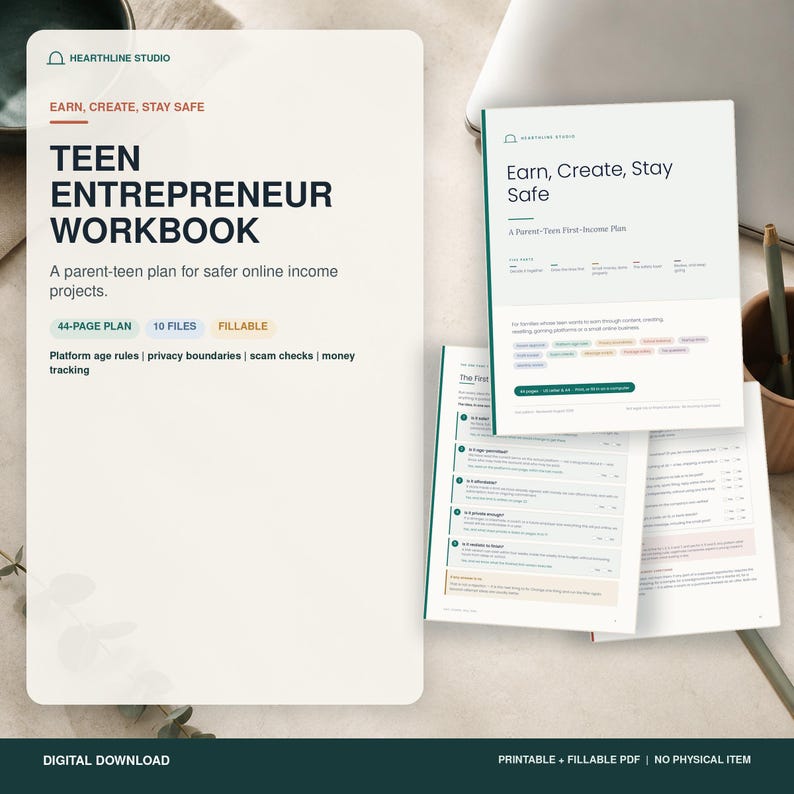
Want the complete plan organized for you?
Earn, Create, Stay Safe turns these decisions into a 44-page parent-teen workbook with platform checks, privacy boundaries, scam screening, money records and a repeatable monthly review.
- Ten organized printable, fillable and mobile-friendly files
- Privacy, payment, platform and scam-safety tools
- No income promises and no platform endorsement
Where to learn more
These sources informed the factual and safety guidance in this article. Links open the original organization's page.
The project can be creative and carefully bounded at the same time.
A written plan makes it easier for a teen to recognize pressure, protect personal information and ask for help. The strongest first milestone is not the first sale—it is knowing how the project will stay safe.
Return to the quick-start plan