A birthday celebration can be joyful without being loud, surprising, crowded or long. Start with the child’s preferences and capacity, then design the event around what helps them participate comfortably.
Sensory-friendly does not mean one universal set of rules. One child may seek movement and music; another may need lower light and fewer voices. Ask rather than assume, make choices visible and give the child a real way to pause, change course or finish early.
Make six decisions before choosing the decorations
These decisions shape the experience more than a theme does. Keep the plan specific, flexible and easy for helpers to follow.
Ask what the child wants
Find out what would feel special, what would feel hard and what they do not want included.
Choose the celebration shape
Consider one friend, a family activity, an open house, a short gathering or another format that fits.
Decide the five flashpoints
Plan the song, candles, gifts, photos and goodbyes instead of assuming the usual version.
Map the sensory load
Notice noise, lighting, smells, crowding, clothing, temperature, movement and transitions.
Create pause and exit options
Set up a quiet place, a signal, a trusted helper and permission to finish early.
Write a simple Plan B
Choose what can be shortened, skipped, moved or changed without treating it as a failed party.
“What are the three parts that would make this feel like your birthday, and which usual party parts should we leave out?”
Build comfort and flexibility into each part of the party
The best plan makes the child’s preferences clear to the adults who are helping, while leaving room for needs to change on the day.
Let the guest list follow capacity
Choose the number and mix of people the child can enjoy. A small celebration is not a lesser celebration, and the child does not need to greet or entertain everyone in the same way.
Describe the plan before the day
Share the order, location, expected length, people and likely sensory experiences. Photos, a simple schedule or a short visit to the venue can reduce uncertainty.
Make activities optional and predictable
Offer a clear start and finish, a quieter alternative and permission to watch. Avoid making group participation the price of belonging at the party.
Choose a quiet space that is genuinely usable
The space should be easy to reach, supervised as appropriate and free from party traffic. Stock it only with supports the child actually uses or chooses.
Plan the five common flashpoints
Ask about singing, candles, opening gifts in front of others, photography and goodbyes. Each can be changed, scheduled, made private or skipped.
Coordinate food information carefully
Ask families directly about allergies and dietary needs, keep labels or ingredient information available and reduce cross-contact risk. Do not promise an allergen-free environment unless it truly meets that standard.
Give one helper the flexibility role
Choose an adult who can reduce noise, redirect guests, protect the quiet space, change the schedule or help the child leave without turning it into a public discussion.
End while the party still feels workable
Use a visible ending and a simple goodbye option. If the child reaches capacity, move to Plan B or finish early without framing the change as bad behavior.
Clear scripts when it is hard to find the words
“We are keeping the celebration flexible. Activities, singing, photos and greetings are optional, so please follow the child’s lead.”
“We are switching to the quieter plan now. Nothing has gone wrong; this is one of the options we prepared.”
“They can watch, join later or skip this part. We are not asking them to perform comfort for the group.”
“You can say goodbye, wave, send a message later or let me do the goodbye for you.”
Keep sensory planning connected to physical safety
Comfort choices matter, and ordinary party hazards still need adult attention. Match supervision and materials to the ages and needs of the children present.
Ask about allergies before the event, read labels, preserve ingredient information and plan for cross-contact. Follow each family’s emergency instructions and seek urgent help for signs of a severe reaction.
Small objects and some sensory products can be choking or ingestion hazards. Water beads can cause serious injury if swallowed and should not be used where children or others at risk could access them.
Check entrances, outdoor boundaries, water, animals, climbing areas and quiet-space supervision. Make the exit plan clear to all adults helping with the event.
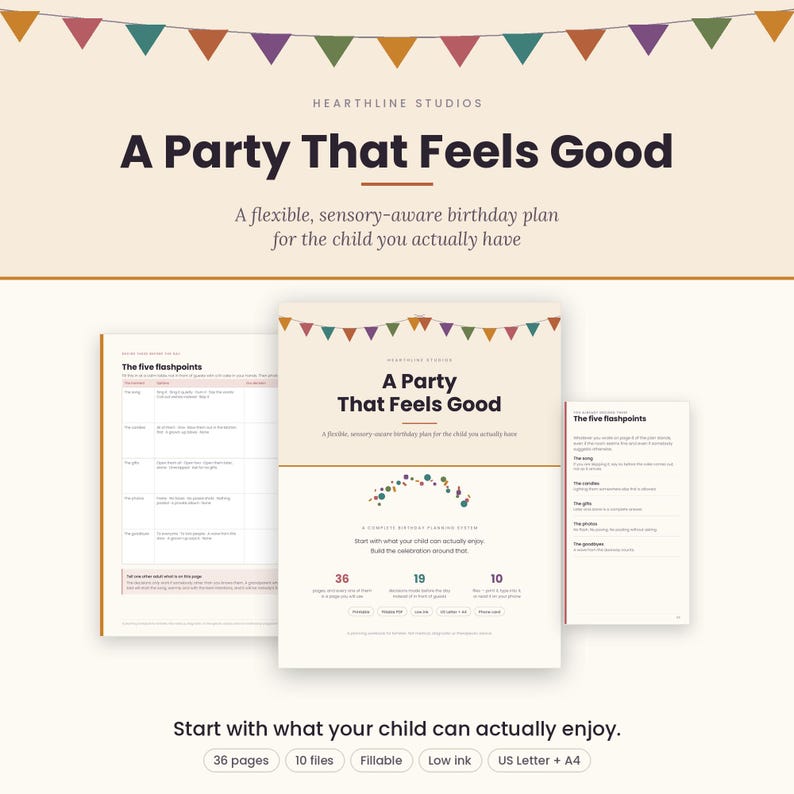
Want the complete plan organized for you?
A Party That Feels Good expands this guide into a 36-page child-centered party planning system with guest, helper, sensory-map, quiet-space and day-of tools.
- Printable, fillable, low-ink, US Letter and A4 files
- Plans people, place, food, activities and five flashpoints
- Designed for flexibility, preferences and a clear Plan B
Where to learn more
These sources informed the factual and safety guidance in this article. Links open the original organization's page.
A successful party is one the child can recognize as their own.
Keep the parts that matter to the child, remove the parts that create pressure and prepare the adults to adapt. The celebration does not need to look typical to feel meaningful.
Return to the quick-start plan