The fastest way to feel more prepared is to decide what you most need the team to understand, what you are asking for and how you will know what was decided.
You do not need to carry every note into the room. A short meeting sheet can hold the child’s strengths, the current concern, three priorities, the evidence that matters and the names of the people responsible for next steps.
Prepare one focused page before the meeting
Use this order whether the meeting was scheduled weeks ago or called at short notice.
Name the purpose
Write one sentence describing why the meeting is happening and what a useful outcome would be.
Choose three asks
Rank the requests that matter most now. Make each one specific enough for the team to discuss and answer.
Bring relevant evidence
Choose a few records, examples or observations that directly support those priorities.
Include child voice
Record what the child wants adults to know, using the communication method that works for them.
Capture decisions
Before leaving, identify what was agreed, what remains open, who owns each action and the expected date.
Could another trusted adult read your meeting page and explain your three priorities accurately? If not, simplify it once more.
Keep the meeting centered on usable decisions
Preparation should support participation, not create another impossible paperwork project.
Start with strengths and present needs
Describe what is working, what has changed and the functional impact at school. Separate direct observations from assumptions.
Turn concerns into answerable asks
Replace a broad concern with a request the team can discuss, such as reviewing a support, collecting data or clarifying who will do what.
Ask for plain-language clarification
Pause unfamiliar terms and repeat back your understanding. Ask what a proposal will look like during an ordinary school day.
Track open questions
Keep a short parking list so unanswered issues do not disappear when the meeting moves on.
Confirm the handoff
End by reviewing decisions, owners, dates and how progress or problems will be communicated.
Follow up while details are fresh
Send a concise written recap, save the records together and note the next review point.
Clear scripts when it is hard to find the words
“My three priorities today are these. Can we make sure each one receives a clear answer or next step?”
“Can you explain what that would look like for my child during a typical day?”
“Let me read back what I captured: the decision, who is responsible and when we will revisit it.”
Know the scope of a planning guide
Meeting preparation can improve clarity, but it does not replace local procedural guidance or individualized professional advice.
An IEP meeting, 504 meeting and parent-teacher conference are not the same process. Use your school’s notices and current local guidance.
Keep copies of notices, plans, evaluations and written communication. Mark personal notes clearly so they are not confused with school records.
Do not wait for a routine meeting or a planner when a child faces an immediate safety risk.
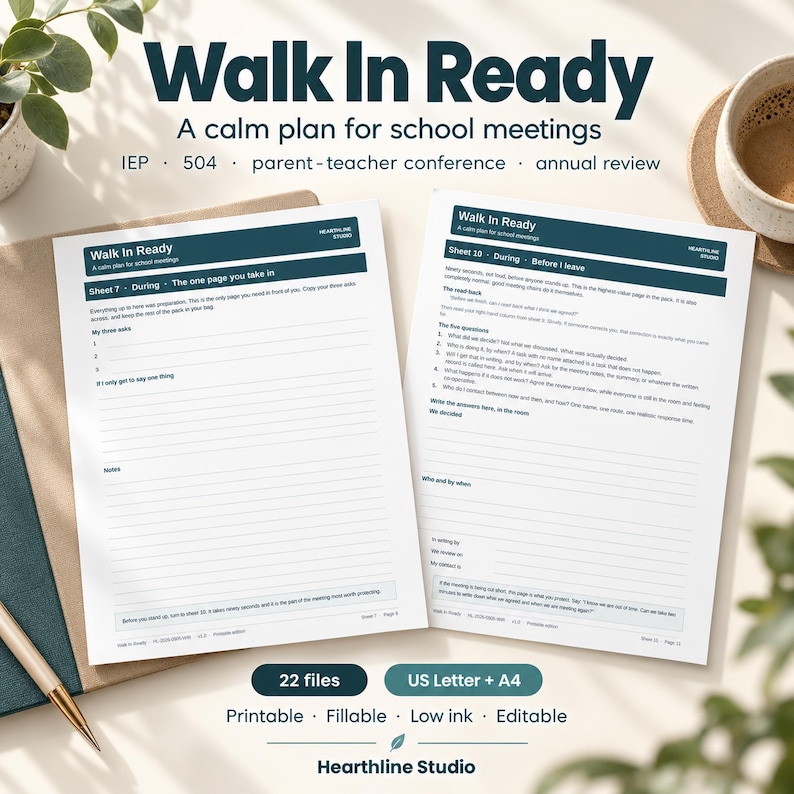
Want the complete plan organized for you?
Walk In Ready turns this process into a 19-sheet system with focused meeting pages, child-voice tools, follow-up templates and a meeting and action log.
- Printable, fillable, low-ink and editable Word formats
- Child voice pages for children, tweens and teens
- Three completed examples and quick-use cards
Where to learn more
These sources informed the factual and safety guidance in this article. Links open the original organization's page.
Prepared does not mean carrying everything.
It means knowing what matters most, making space for the child’s voice and leaving with a record of what happens next.
Return to the quick-start plan